
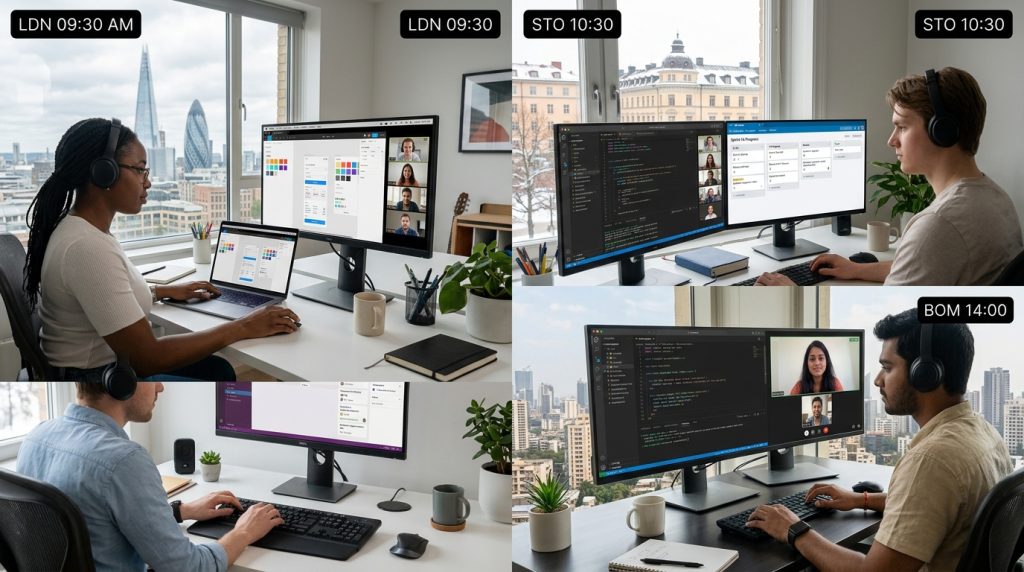
To manage remote workflows effectively, you need more than tools. You need structure, clarity, and consistency. When teams are distributed, even small gaps in communication can slow progress. Therefore, building a strong system becomes essential.
Today, teams that get this right often outperform traditional setups. They collaborate faster, reduce misunderstandings, and adapt quickly. However, this only happens when workflows are clearly defined and consistently followed.
In this guide, you’ll learn how to manage remote workflows across design and development without friction. More importantly, you’ll discover practical ways to improve alignment and efficiency.
Why remote teams struggle without clear systems
Many teams assume remote work is simply about location. However, that assumption creates problems. Without clear processes, communication becomes scattered and priorities get lost.
Instead of relying on casual conversations, remote teams must depend on structured updates. For example, shared tools and written communication replace quick discussions.
Additionally, time zones add complexity. Because of this, asynchronous collaboration becomes critical. Teams that fail to adjust often experience delays.
On the other hand, teams with strong systems create clarity. As a result, they stay aligned even when working apart.
Build a foundation that supports your workflow
Before choosing tools, define how your team operates. This step sets the direction for everything else.
A strong foundation includes:
- Clear roles and responsibilities
- Defined design-to-development handoffs
- Organized file systems
- Shared timelines and expectations
For example, designers should know when work is ready for development. Meanwhile, developers should understand exactly what they need before starting.
If you want to standardize your process, creating internal guides helps. You can organize workflow documentation similar to resources found at https://www.wellnessonthegreen.com/golf-buying-guides.
Choose tools that enhance your workflow
Tools should support your system, not control it. Many teams rely too heavily on software without defining how they work first.
For better collaboration, consider:
- Figma for design: https://www.figma.com
- GitHub for development: https://github.com
- Slack for communication: https://slack.com
When these tools integrate well, teams spend less time switching platforms. For instance, linking design files to development tasks improves clarity.
Additionally, documenting your tool setup internally can help new team members. A structured content hub like https://www.wellnessonthegreen.com/golf-insights-and-tips can serve as inspiration.
Create a smooth design-to-development handoff
Handoffs often create friction. If unclear, they slow projects down significantly.
To improve this process, define what “ready” means. Designers should provide finalized designs, clear specifications, and interaction details.
At the same time, developers should review designs early. This prevents misunderstandings later.
Because of this, effective teams treat handoff as a shared responsibility rather than a one-time step.
Use asynchronous communication effectively
Remote teams rarely work at the same time. Therefore, asynchronous communication becomes essential.
Instead of relying on meetings, focus on clarity in written updates. For example:
- Use detailed task descriptions
- Document key decisions
- Share short recorded explanations
As a result, team members stay informed without constant interruptions. Furthermore, work continues across time zones.
However, live discussions still matter for complex topics. The key is finding the right balance.
Keep documentation simple and useful
Documentation supports consistency. Without it, teams repeat mistakes and lose important information.
Good documentation helps:
- Onboard new team members faster
- Maintain alignment
- Reduce confusion
That said, keep it simple. Focus on practical guides instead of overly detailed documents.
Build feedback into your workflow
Feedback keeps projects moving in the right direction. Without it, small issues grow over time.
Include feedback at multiple stages:
- Early design reviews
- Mid-project check-ins
- Pre-launch validation
- Post-project evaluation
Because feedback happens regularly, teams catch issues earlier. As a result, they avoid costly revisions.
Improve visibility across your team
Visibility is often lost in remote environments. Without it, teams feel disconnected.
To solve this, use shared dashboards or boards. These tools show progress, completed tasks, and blockers.
This transparency improves decision-making. It also helps everyone understand the bigger picture.
Handle time zones with intention
Time zones can either slow your team down or help you move faster.
To work effectively:
- Identify overlap hours
- Structure tasks for async progress
- Set realistic expectations
For example, one team can complete work while another is offline. This creates continuous progress.
However, avoid expecting instant responses. Respecting time zones improves morale.
Standardize systems for consistency
Consistency becomes more important as teams grow. Without it, work becomes fragmented.
Creating shared systems helps maintain alignment. Design systems, coding standards, and templates all play a role.
As a result, teams work faster and make fewer mistakes. Moreover, scaling becomes easier.
Reduce unnecessary meetings
Too many meetings can slow teams down. While some are necessary, many can be avoided.
Before scheduling a meeting, ask if the discussion can happen asynchronously. If not, keep meetings short and focused.
This approach ensures that time is used effectively.
Encourage ownership and accountability
Remote work requires trust. Without it, productivity drops.
Each team member should understand their responsibilities. Clear ownership leads to better results.
At the same time, avoid micromanagement. Focus on outcomes rather than constant monitoring.
Continuously improve your workflow
No system is perfect. The best teams refine their process over time.
Regularly review your workflow. Look for bottlenecks, communication gaps, and inefficiencies.
Then, make small improvements. Over time, these changes create a smoother system.
Conclusion
Learning how to manage remote workflows effectively can transform your team’s performance. While remote work introduces challenges, it also offers flexibility and efficiency.
By focusing on clarity, communication, and consistency, you create a system that supports both designers and developers. Moreover, aligning tools with your workflow ensures smoother collaboration.
With the right approach, remote teams can reduce friction, improve output, and scale faster. In the end, strong workflows turn remote work into a real advantage.
FAQ
- What is the biggest challenge in remote workflows?
Lack of clarity is the most common issue. Without structure, communication breaks down quickly. - How can teams stay aligned remotely?
Use shared tools, clear documentation, and regular feedback to maintain alignment. - What tools are essential for remote teams?
Design, development, and communication tools are key, especially when integrated properly. - How do you reduce delays in remote projects?
Define clear processes, improve visibility, and manage expectations across time zones. - How often should workflows be reviewed?
Review workflows regularly. Continuous improvement leads to better long-term performance.